



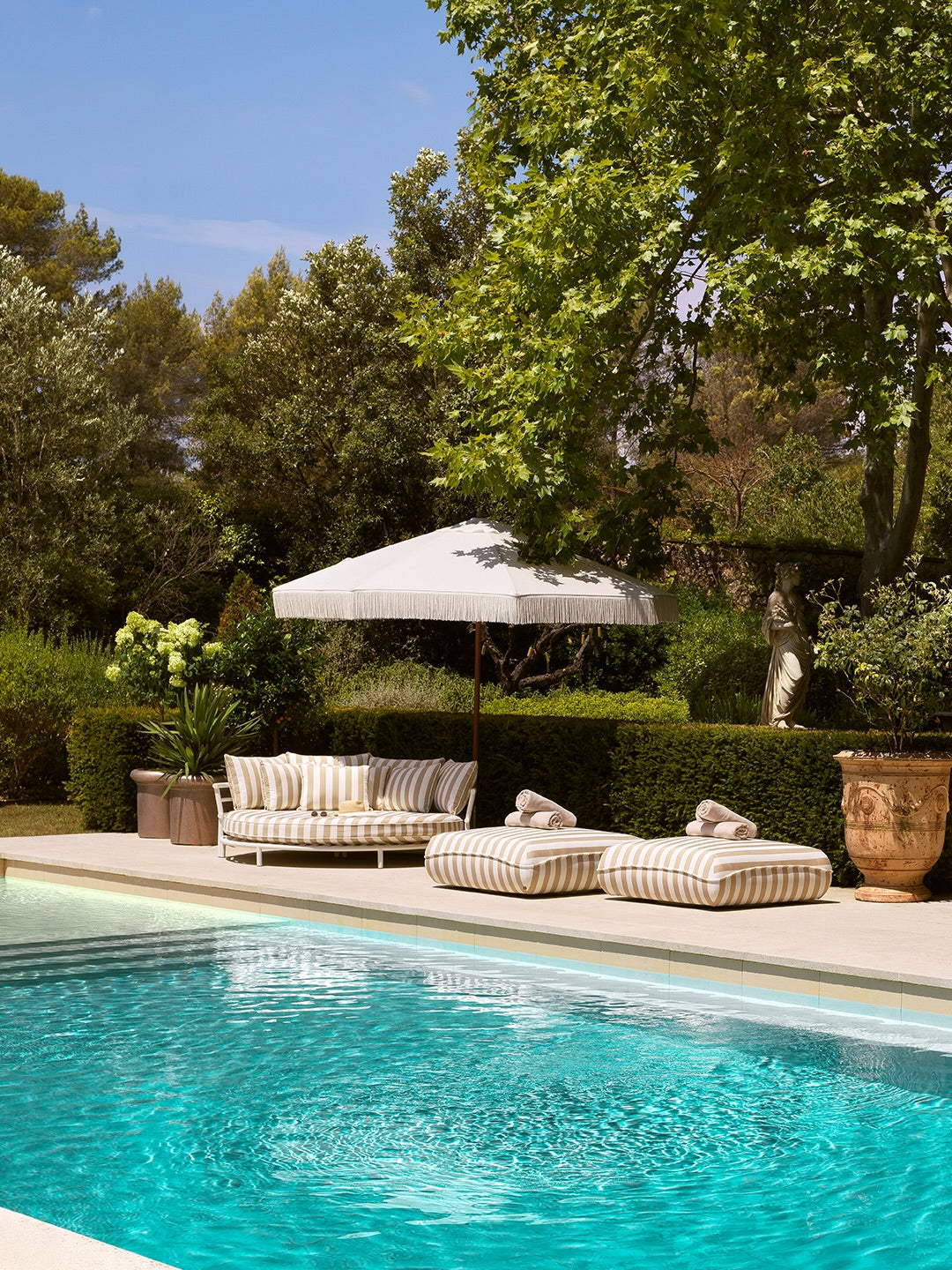
Light is the invisible material of interior design. You can have the most beautiful furniture in the world—a high-end sofa, an exceptional armchair, a carefully chosen rug—but if the lighting is poorly conceived, the entire effect is negated. Conversely, a single well-chosen fixture can elevate an ordinary interior and give it unexpected depth.
In 2026, lighting becomes a central element of the interior, going far beyond its primary function. Each lamp, each pendant, each chandelier contributes to the interior decoration and structures the living space. Light plays a strong emotional role, capable of instantly transforming a room.
This guide gives you the keys to choosing, positioning, and combining your light fixtures with the intelligence of an interior designer.
1. The sculptural light fixture: the trend that redefines lighting
The most defining lighting trend for 2026 is the emergence of the light fixture as a decorative piece in its own right, independent of its illuminating function. In the 2026 lighting trends, you no longer choose a lamp just to light up a space. You choose it for its raw visual impact, even when switched off. It becomes an essential focal point.
We now speak of sculptural pendants, designer floor lamps, or even sculptural lighting, where organic form takes precedence over purely technical function. This evolution directly corresponds to the rise of quiet luxury in furniture: quality is found in the details, in the materials, in the formal signature, not in ostentation.
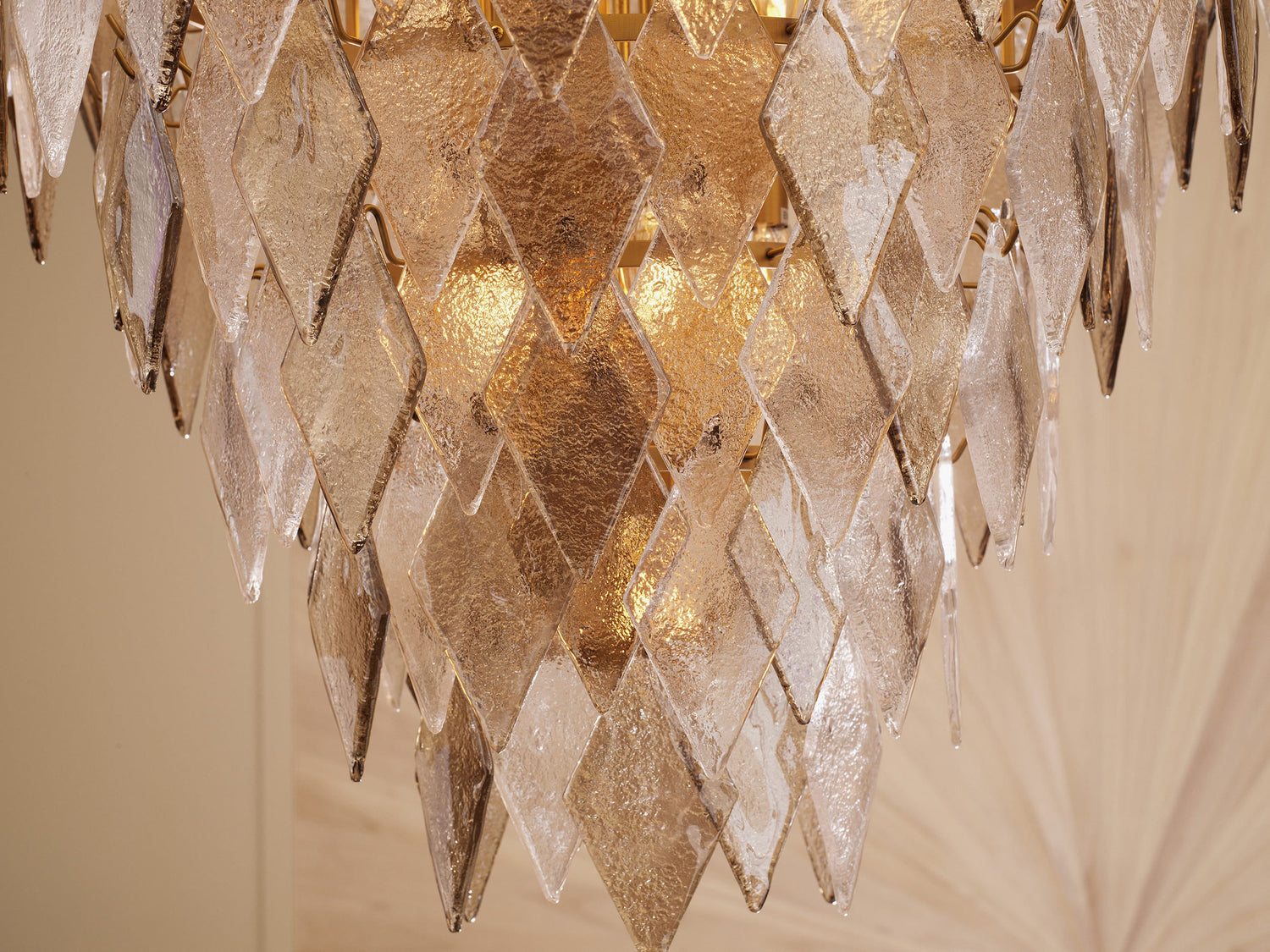
For a high-end interior, this means that a light fixture must be chosen with the same care as a work of art or a signature piece of furniture. Designers are focusing on blown glass pendants, copper floor lamps, or table lamps with geometric lines. These creations do more than just light up a space: they adorn it like luminous jewels.
2. Dominant materials: natural, metal, glass
In 2026, designer light fixtures will increasingly highlight natural materials. Wood is one of the most prominent materials. It brings warmth and an authentic look to lighting. Light wood or solid wood pendants integrate perfectly into Scandinavian, contemporary, or minimalist interiors. Rattan and natural fibers are also very popular.
Conversely, metal is making a strong comeback. We are seeing a rise in polished metal and chrome, which bring a contemporary and sophisticated touch. Brushed brass remains the most sought-after finish in the high-end segment: it naturally complements warm materials such as velvet, dark wood, and leather, without ever appearing cold or clinical.
Hand-blown glass constitutes the third major family. Amber glass returns to the forefront with its soft, retro glow. Its warm hue softens the light and creates a soothing atmosphere, ideal for luminaires, vases, and decorative objects. An amber or smoked blown glass pendant above a walnut dining table, with a natural linen sofa: this is one of the most coherent and effective compositions of the season.
3. Typologies: pendant, floor lamp, wall light—which for each space?
Each type of light fixture has a precise role in the lighting composition of a room.
The pendant light is the central piece. The pendant light fixture no longer just illuminates: it becomes a signature, a strong visual anchor point, a sculptural element in its own right. It conveys a style, a mood, an intention. In a living room, it is placed above the sofa area or coffee table to create a visual focal point. In a dining room, it should be centered over the table, about 75–85 cm from the tabletop, so as not to obstruct the view when seated, while diffusing an enveloping light over the entire table.
The floor lamp is for secondary ambiance lighting. It complements the pendant without competing with it, creates an essential auxiliary light source for evenings, and defines the corners of the room. A sculptural pendant to illuminate the dining table, a smart LED wall light for accent lighting, a decorative table lamp to warm the atmosphere. These three superimposed levels of lighting are the hallmark of high-end interiors: they allow for complete modulation of the atmosphere according to the time and use.
The wall light structures circulation areas and bedrooms. In a hallway or entrance, it advantageously replaces a central, overly uniform ceiling light. In a bedroom, two symmetrical wall lights on either side of the bed free up bedside tables while creating soft, localized lighting, ideal for reading.
4. Layering light sources: the three-level rule
In 2026, the key will be to layer light sources: spotlights, wall lights, pendants, and table lamps will complement each other to create adaptable atmospheres.
This is the fundamental principle shared by all truly successful interiors in terms of lighting: there is no single light fixture sufficient for an entire room. Three levels must coexist.
The first level is general lighting, a central pendant or chandelier, which sets the luminous tone of the room. The second is functional lighting—a floor lamp near the sofa, a desk lamp, a reading wall light—which meets specific needs. The third is decorative lighting—candle holders, low table lamps, accent spotlights on a work of art or a piece of furniture—which creates depth and contrasts.
Warm tones between 2,700 and 3,000 K remain the best allies for a soft and enveloping ambiance, ideal for relaxing at the end of the day. In the high-end segment, dimmers are essential: they allow the light intensity to be adapted to every living scenario, from dinner with friends to a solo reading evening.
5. Mistakes to avoid
Choosing a light fixture that is too small. This is the most common mistake. For a living room of 20 m² or more, opt for a pendant or chandelier 60 to 80 cm in diameter. This creates a focal point while diffusing uniform light. An undersized light fixture has no decorative impact and provides insufficient illumination.
Limiting yourself to a single source. A ceiling equipped with a single central ceiling light is a sign of an undeveloped interior. Even with an exceptional light fixture, the absence of secondary sources creates flat light without depth.
Neglecting the coherence of finishes. In a high-end interior, light fixtures must interact with the rest of the furniture. A brushed brass chandelier will naturally match table bases in gilded metal, brass door handles, and mirrors with gilded frames. The coherence of materials and finishes is what distinguishes a well-composed interior from an assembly of beautiful pieces without any connection between them.
Conclusion
High-end designer lighting is not an accessory. It is one of the most powerful, and often most underestimated, levers in interior design. Well-chosen, well-positioned, and well-combined with other light sources, it radically transforms the atmosphere of a space and enhances every piece of furniture around it.
Explore our selection of designer lamps — pendants, floor lamps and wall lights by Eichholtz, and create lighting that lives up to your interior.

Leave a comment
This site is protected by hCaptcha and the hCaptcha Privacy Policy and Terms of Service apply.