



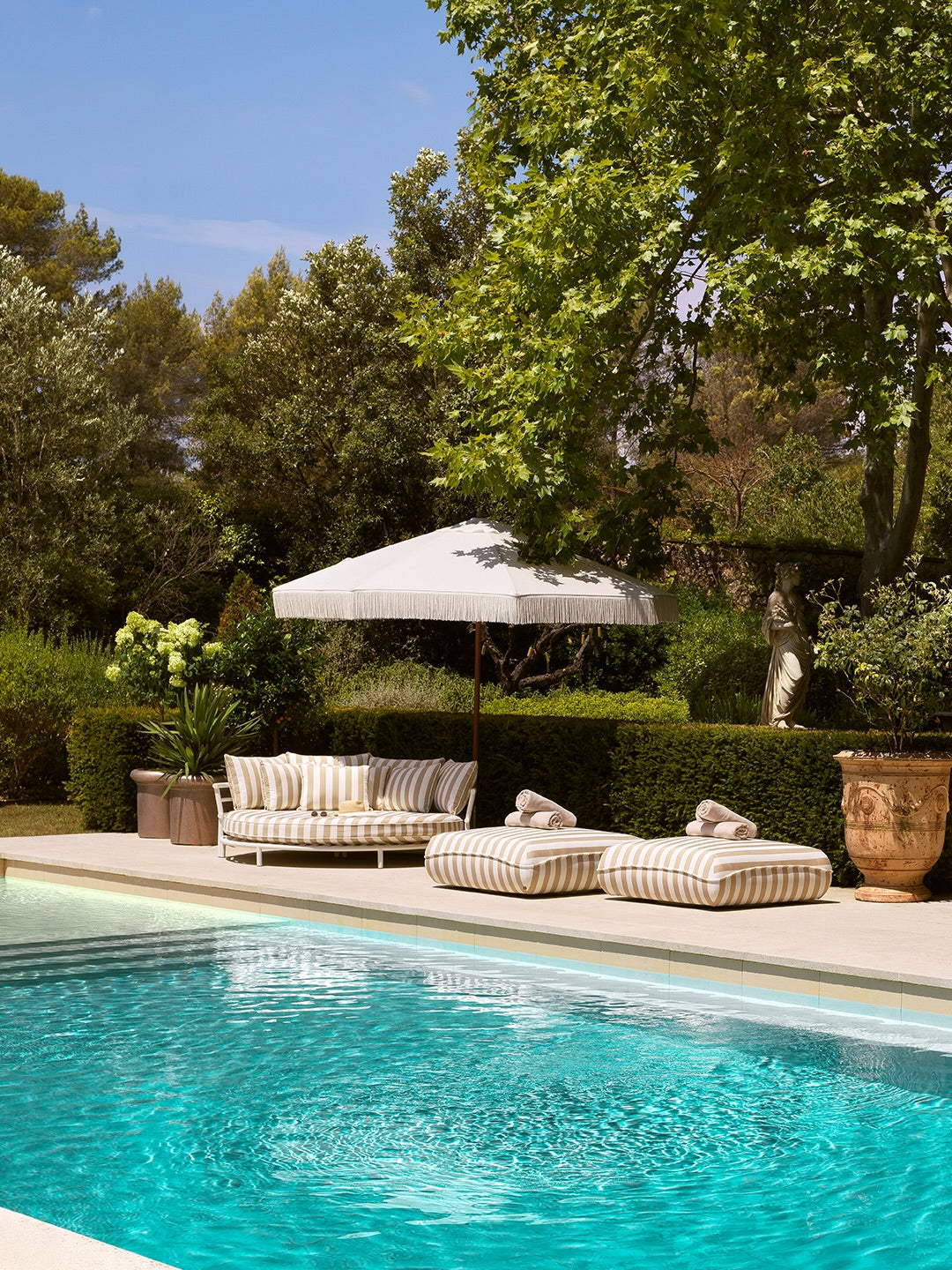
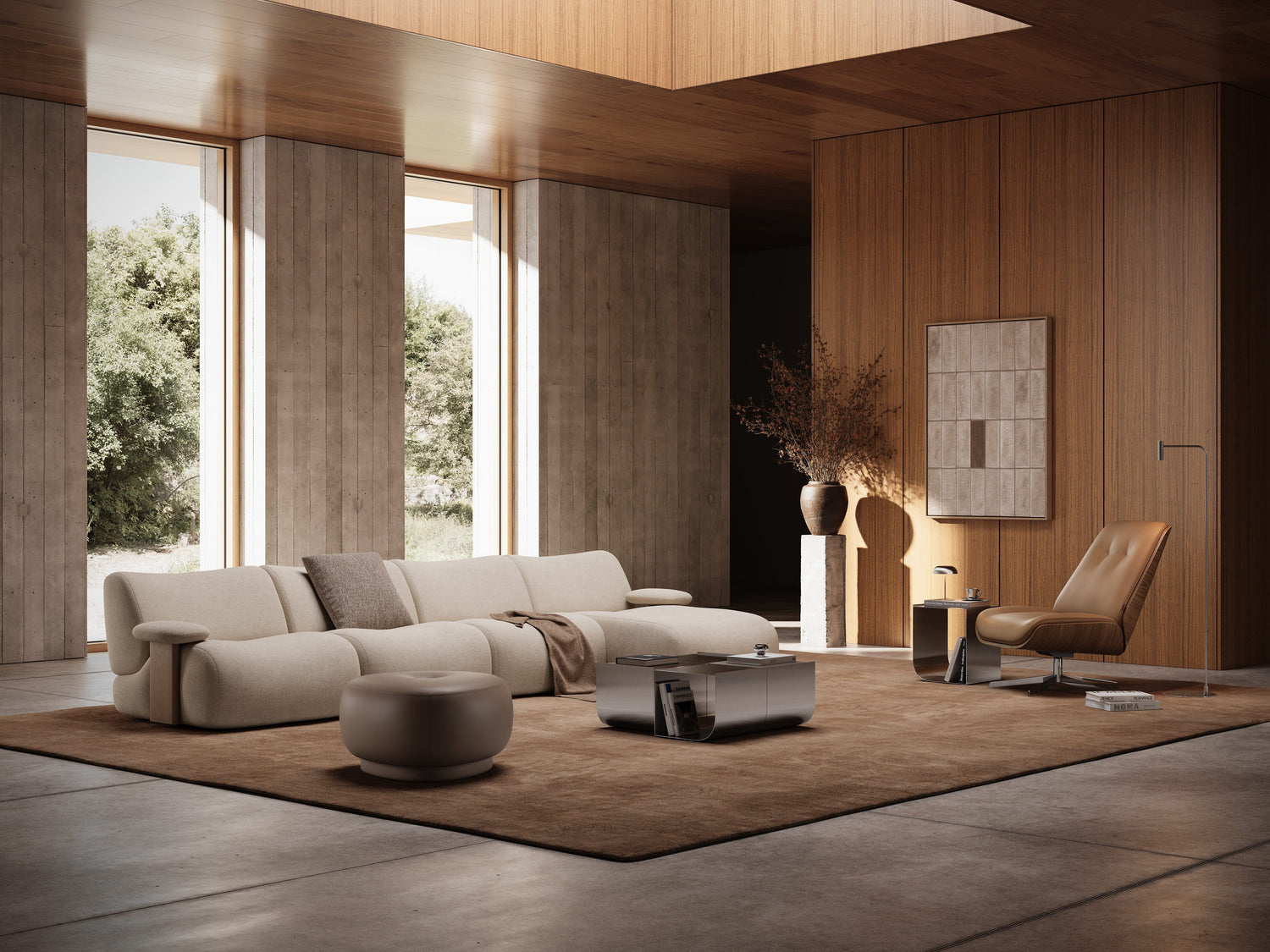
The sofa is the piece of furniture you cannot compromise on. It sets the tone for your living room, structures the space, and, in a well-designed interior, it immediately catches the eye. In 2026, the sofa is more than ever the centerpiece of the living room. Much more than just a piece of furniture, it reflects your personality and your way of life.
But choosing a high-end sofa is not something to be rushed. Between materials, shapes, dimensions, and manufacturing philosophies, there are many variables, and mistakes can be costly. This guide gives you the keys to making an informed, durable choice that is perfectly aligned with current trends.
1. Quiet Luxury: The New Standard for High-End Sofas
The underlying trend redefining living room furniture in 2026 has a name: quiet luxury. Customers are looking for pieces whose quality is perceived by touch and sight, not by the label. It's a luxury that is lived daily rather than displayed.
Concretely, this translates into sofas with no visible logos, no superfluous embellishments, whose value lies entirely in the quality of the materials, the precision of the finishes, and the coherence of the design. A high-end sofa in the sense of quiet luxury is recognizable at first glance, and fully revealed to the touch.
For REMO-HOME, this is precisely the spirit that guides the selection of our brands: Domkapa for its combinations of technical fabrics and exceptional leather, Andrew Martin for its unexpected and mastered texture mixes, Eichholtz for its meticulous finishes down to the smallest structural detail.
2. Dominant Shapes: The Era of Organic and Enveloping Sofas
Gone are sofas with right angles and strictly geometric lines. Organic shapes inspired by the 70s remain in vogue. Rounded armrests, curved backs, and generous proportions contribute to creating a cocoon-like impression.
This evolution of shapes responds to a deep need: that of visible comfort, of furniture that invites you to settle in. For this new year, priority is given to comfort and conviviality. Lines are generous and enveloping, inviting relaxation.
In the high-end range, this trend is reflected in low lounge-style sofas close to the floor, models with curved backs that hug the silhouette, or generous L-shaped configurations that become the structuring heart of the living room. The important thing is that the shape never compromises support: a good high-end sofa combines enveloping and supportive qualities.
3. Material Choice: Velvet, Linen, Bouclé, Which One for You?
This is often the most important question, and the least well-covered in buying guides. Here's a clear breakdown of the three flagship materials of the moment.
Velvet remains the absolute reference for a sofa with character. Velvet armchairs and sofas are experiencing a surge in popularity in 2026. It catches the light, enhances deep colors—burgundy, navy blue, emerald green—and immediately lends a theatrical dimension to a living room. Its main constraint is maintenance: quality velvet requires regular brushing and fears moisture. On the other hand, velvet has excellent durability when it is of superior quality.
Natural linen is the material of quiet luxury par excellence. Discreet, authentic, it develops a unique patina over time that belongs only to it. It is perfectly suited to interiors that favor neutral tones and raw materials. Linen is becoming democratized in more efficient, removable, easy-care versions, designed to last.
Bouclé seduces with its immediate textural rendering and its cocooning spirit. Bouclé is still present, but less pervasive than in recent years: used in touches, on an armchair or ottoman, to add texture without saturating the space. On a large living room sofa, it can quickly take up a lot of visual space; it is often wiser to reserve it for an accent armchair or a chaise longue, to create a play of materials with a linen or velvet sofa.
4. Sofa Color: Daring or Staying Neutral?
The answer depends on your overall decorative project and your time horizon.
Terracotta, deep sage green, navy blue, and burgundy tones dominate the new collections. These colors create enveloping and sophisticated spaces, far from the coldness of all-white. A burgundy velvet or sage green linen sofa can become the focal point of an entire living room, provided it is surrounded by warm neutrals: taupe, cream, dark wood.
For those who prefer longevity over trend, neutral tones remain a risk-free investment: burgundy, cobalt blue, or emerald green add a touch of sophistication, but neutral shades remain safe bets. A natural linen sofa in warm taupe or slate gray will span seasons and re-edits of your decor without ever looking dated.
The golden rule in high-end: the more assertive and expensive the piece, the more carefully the color should be chosen. A trendy color on a €3,000 sofa can become a regret in three years. An timeless shade on the same sofa is a protected investment.
5. Modular or Fixed? The Question of Functional Durability
The 2026 furniture market values repairable, adaptable, and sometimes configurable pieces. This is a change in approach: less disposable purchasing, more investment in furniture that lasts and adapts.
The high-end modular sofa fits this logic: it allows for reconfiguring the layout, adding a module when moving, or changing a damaged cover without replacing the entire structure. This is a strong argument for buyers who plan their furniture for ten years rather than two or three.
A fixed sofa, on the other hand, often offers superior formal coherence: its profile is conceived as a sculpture, not as an assembly of modules. It is perfectly suited to stable spaces, to interiors whose configuration is not expected to evolve. In the high-end, this format often yields the most attractive silhouettes.
6. Technical Criteria That Make the Difference
A high-end sofa distinguishes itself from a standard sofa on several precise points, often invisible at purchase but crucial in use.
First, the structure: a frame made of dried solid wood is clearly superior to a chipboard or tubular metal frame alone. It guarantees the stability of the sofa over time, even with intensive use. Next, the foam density: a density of at least 30 kg/m³ ensures excellent comfort and better durability of the seat over time. Below this, sagging is almost inevitable after a few years. Finally, the finishes: bolted, not glued, legs, strong and regular seams, fillings that don't shift—all details that immediately betray the level of craftsmanship.
At REMO-HOME, every sofa in our catalog meets these technical criteria. Domkapa, for example, works with solid pine frames and high-resilience foams; Andrew Martin selects its coverings for their durability as much as for their aesthetics.
Choosing a high-end sofa means choosing the piece on which your entire living room rests, both literally and figuratively. Material, shape, color, structure: every decision counts and deserves consideration. But once the right sofa is found, it becomes what exceptional interiors have in common: a natural, obvious presence that needs no explanation.
Explore our selection of high-end sofas — VICAL, Andrew Martin, Eichholtz, and find the piece that will become the heart of your living room.

Leave a comment
This site is protected by hCaptcha and the hCaptcha Privacy Policy and Terms of Service apply.